
Let’s start with a brutal truth about marketing: nobody likes wasting money. If marketing had a villain, it would be the line, “We ran ads, but we’re not sure what worked.”
Enter performance marketing — the marketing strategy that says, “Relax, you only pay when something actually happens.”
In this guide, we’ll break down what marketing is, how it works, why it matters, and how businesses use it to grow, all in a clear, beginner-friendly way—with a little humour along the way. Because learning marketing doesn’t have to feel like reading a tax notice.
What Is Performance Marketing?
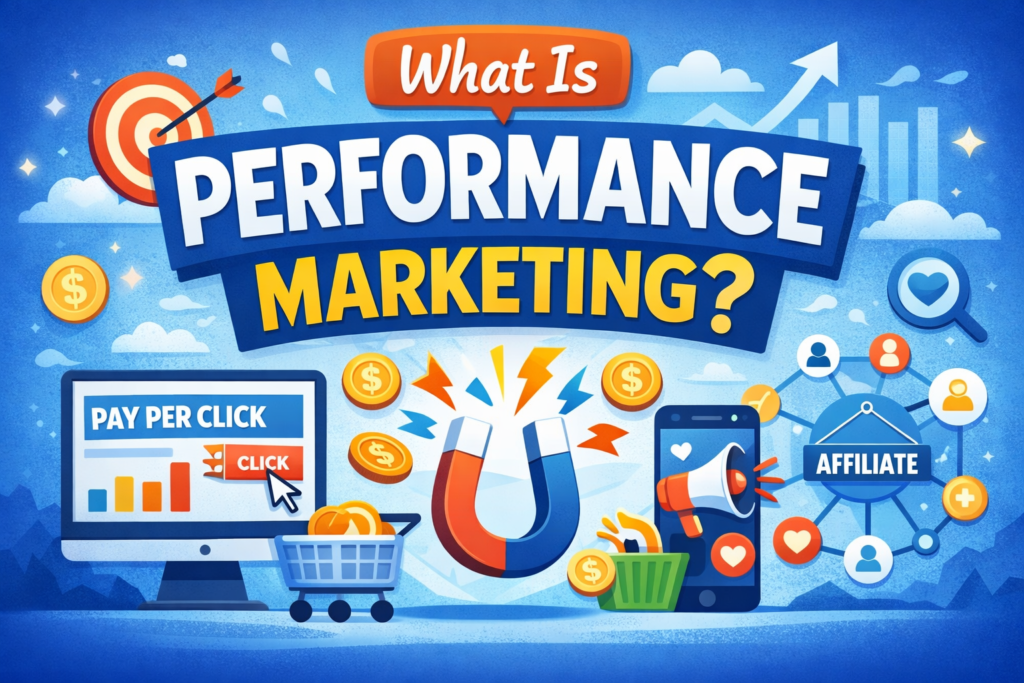
Performance marketing is a results-driven digital marketing approach where advertisers pay only when a specific, measurable action is completed.
These actions can include:
- Clicking an ad
- Filling out a form (lead generation)
- Signing up for a newsletter
- Making a purchase
In simple terms:
No results? No payment.
Results delivered? Money well spent.
Unlike traditional advertising (billboards, TV ads, newspaper ads), performance marketing focuses on trackable outcomes, not hopeful impressions.
Why Performance Marketing Exists (And Why Businesses Love It)
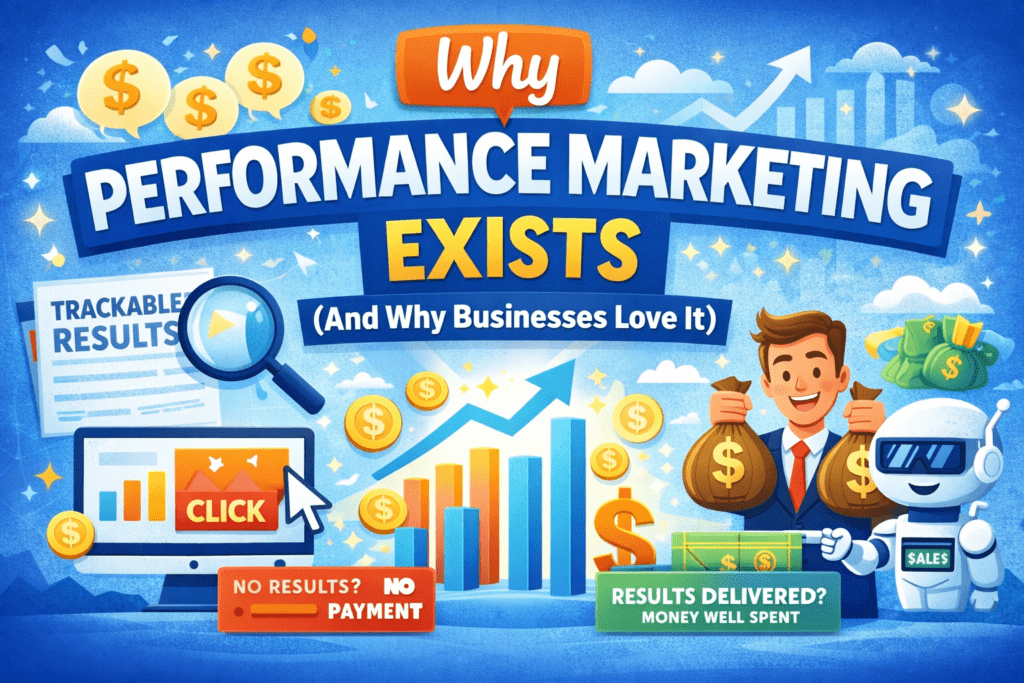
Once upon a time, businesses paid upfront for ads and prayed for results. Performance marketing flipped the script by asking one powerful question:
“What exactly am I getting for my money?”
The rise of digital platforms, real-time analytics, and AI-powered tracking made performance marketing possible—and extremely popular.
Businesses love it because:
ROI is easy to measure
Budgets are easier to control
Decisions are based on data, not vibes
In short, marketing turns marketing into a numbers game you can actually win.
Performance Marketing vs Brand Marketing
Let’s clear up a common confusion.
Performance Marketing
Focuses on short-term, measurable results
Tracks clicks, leads, sales, and conversions
Optimised continuously using data
Great for driving immediate growth
Brand Marketing
Focuses on long-term brand awareness
Builds trust, emotion, and recognition
Harder to measure directly
Great for loyalty and credibility
Think of it this way:
Brand marketing makes people remember you. Marketing makes people buy from you.
The smartest businesses use both.
Is Performance Marketing the Same as Affiliate Marketing?
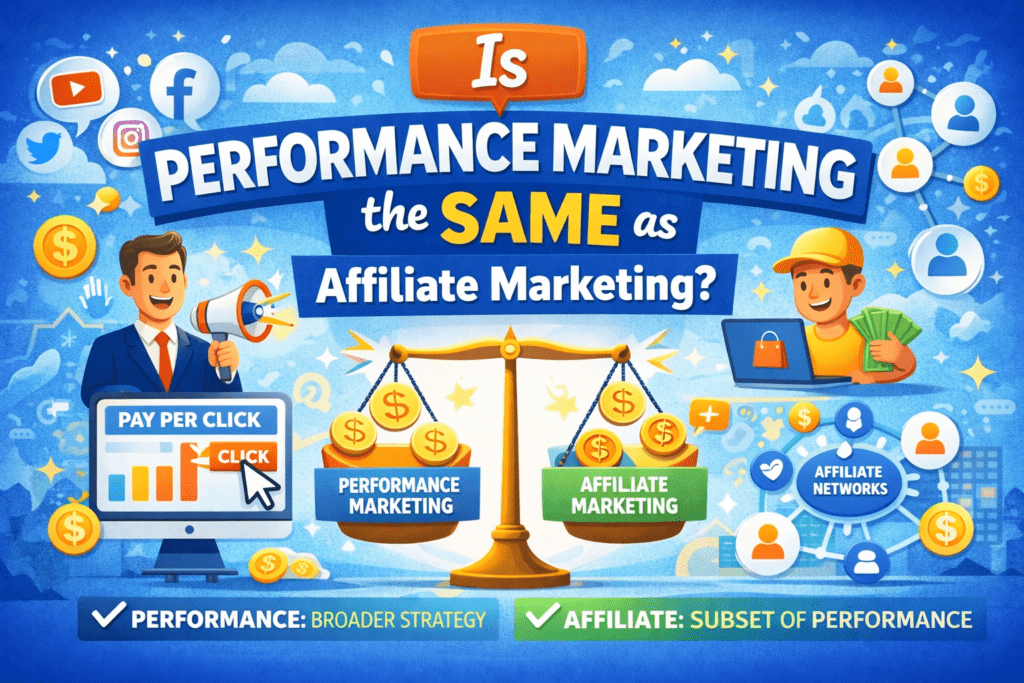
Not exactly.
Affiliate marketing is a subset of performance marketing.
In affiliate marketing:
You partner with bloggers, influencers, or publishers
They promote your product
You pay them only when a sale or lead happens
It is broader. It also includes:
Paid search ads
Social media advertising
Native ads
Influencer campaigns (when performance-based)
If you’re paying only for results, congratulations — you’re doing performance marketing.
How Does Performance Marketing Work?
Performance marketing follows a simple but powerful process:
1. Set Clear Goals
Decide what success looks like:
More website traffic
More leads
More sales
If you don’t define success, your campaign will define failure for you.
2. Choose the Right Channels
Advertisers run campaigns on platforms like:
Google Ads
Facebook & Instagram Ads
LinkedIn Ads
Affiliate networks
Native advertising platforms
3. Track Everything
Every click, conversion, and action is tracked in real time using analytics tools.
Yes, marketers love dashboards. And no, they don’t apologise for it.
4. Optimise Continuously
Underperforming ads are paused.
Winning ads get more budget.
Creatives, audiences, and bids are constantly improved.
Performance marketing is never “set and forget.” It’s more like “set, watch, tweak, repeat.”
Popular Performance Marketing Channels
1. Paid Search (PPC)
Ads that appear on search engines like Google when users search for specific keywords. You usually pay per click.
Example: A bakery running ads for “custom birthday cakes near me.”
2. Social Media Advertising
Platforms like Facebook, Instagram, LinkedIn, and TikTok allow hyper-targeted campaigns based on interests, age, location, and behaviour.
Great for reaching people who didn’t even know they needed your product.
3. Affiliate Marketing
Publishers and influencers promote your product and earn a commission per sale or lead.
Low risk, high accountability.
4. Native Advertising
Ads that blend into editorial content on websites (think “recommended for you” articles).
Less annoying, more effective.
5. Influencer Marketing (Performance-Based)
Influencers are paid based on actual results like clicks or sign-ups—not just selfies and hashtags.
By- GenNex Marketers