
Let’s be honest — running a business without lead generation is like opening a shop, locking the door, and then wondering why no one is buying.
Lead generation is the not-so-secret engine behind sales, growth, and marketing success.
In this guide, we’ll break down what lead generation really means, how it works, and how you can do it better, without turning your audience into annoyed “unsubscribe” experts.
What Is Lead Generation?
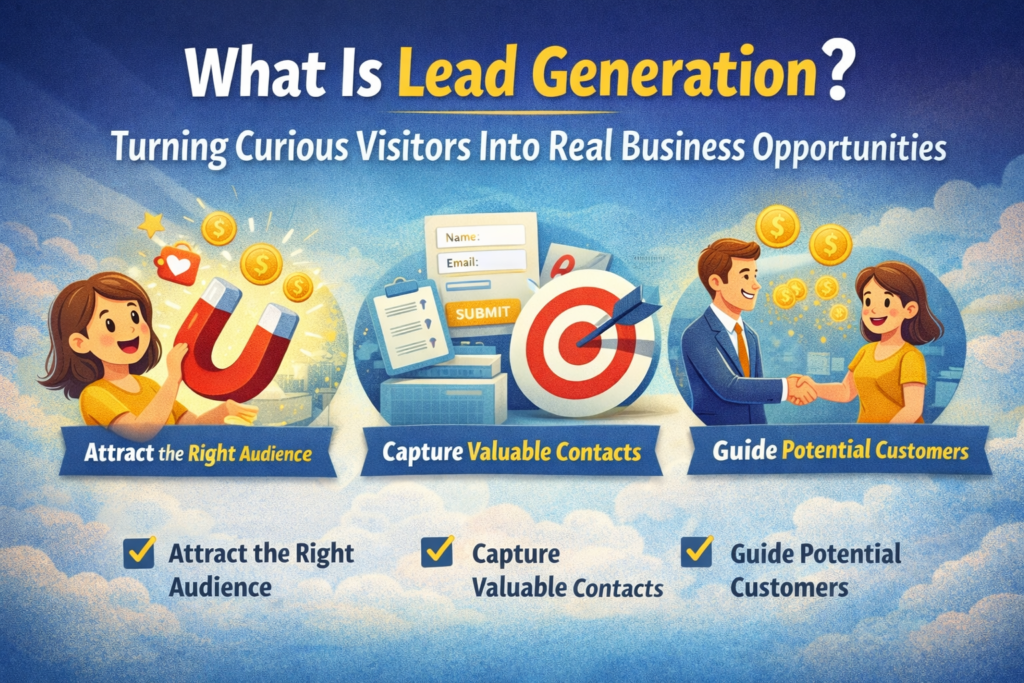
It is the process of attracting potential customers and collecting their contact information so you can nurture them into paying clients.
A lead is anyone who:
- Shows interest in your product or service
- Shares details like email, phone number, or company name
In simple words:
Lead generation turns strangers into contacts, contacts into conversations, and conversations into customers.
Why Lead Generation Is So Important?
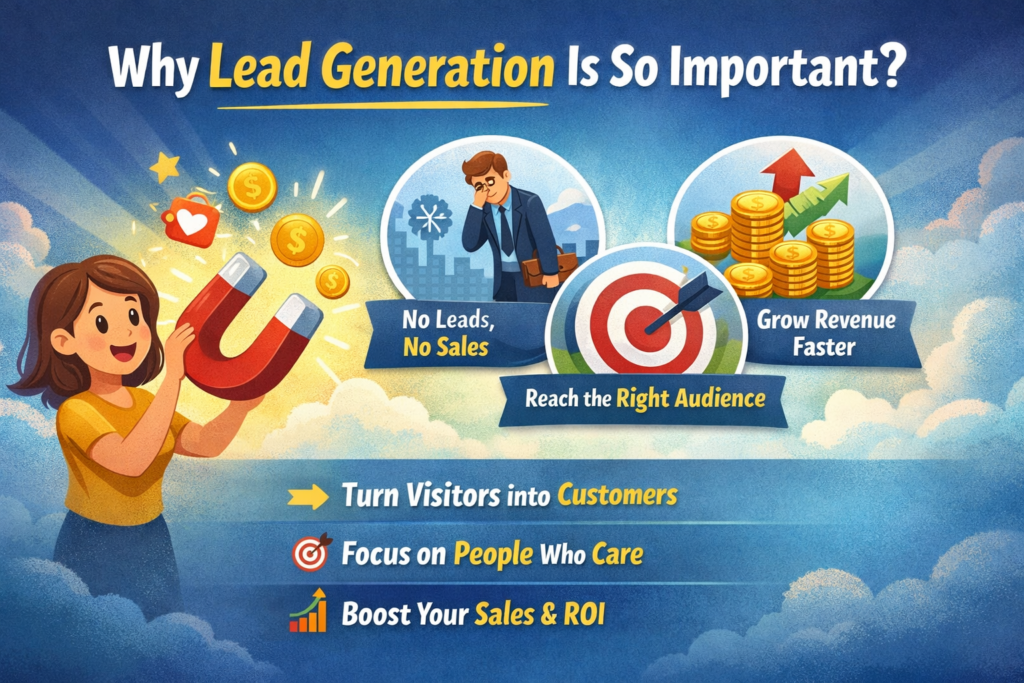
People rarely buy the first time they visit your website. They browse, compare, get distracted, and sometimes forget you existed.
Lead generation ensures:
You don’t lose interested visitors forever
Your sales team talks to people who actually care
Marketing efforts are measurable and scalable
Without leads, sales teams chase cold prospects. With leads, they have warm conversations. Big difference.
How Lead Generation Works (Step by Step)
Think of lead as a friendly handshake, not a sales pitch.
1. Attract the Right Audience
You bring people to your website using:
SEO (Google searches)
Social media
Paid ads
Blog content
Videos or webinars
2. Offer Something Valuable
Nobody gives their email for “nothing.”
So you offer:
Free guides or eBooks
Checklists
Webinars
Free trials
Discounts
This is called a lead magnet.
3. Capture the Lead
Visitors fill out a form and share their details.
Congratulations — you now have a lead.
4. Nurture the Lead
Through:
Email marketing
Educational content
Follow-ups
Retargeting ads
Eventually, the lead becomes a customer.
How to Improve Your Lead Generation Strategy
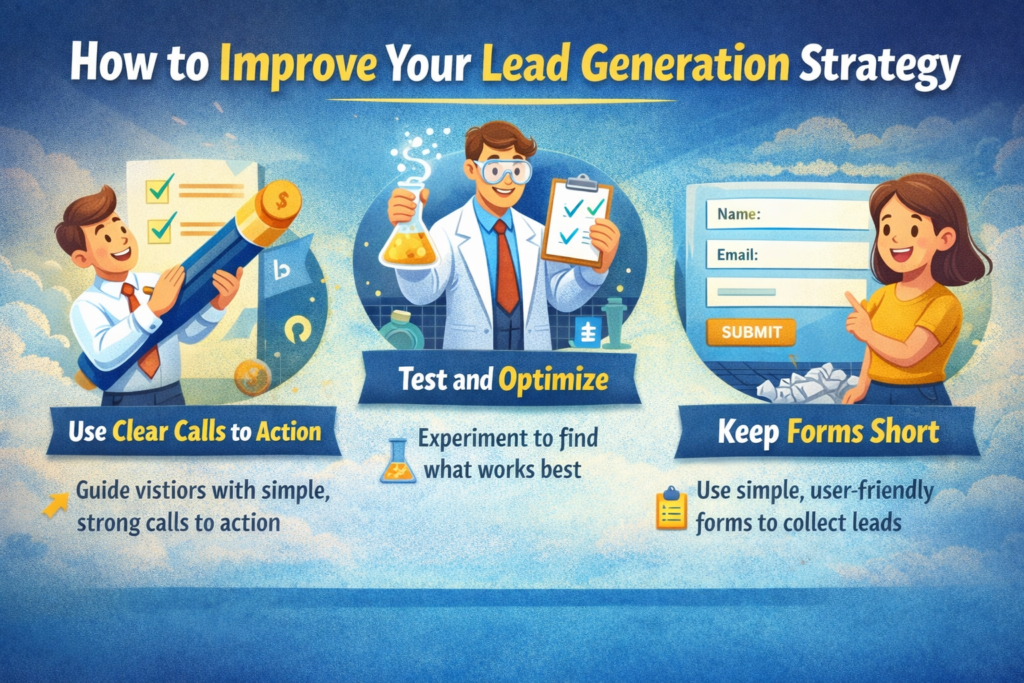
1. Use Clear Calls to Action
Tell people exactly what to do:
“Download the free guide”
“Get a free consultation”
“Start your free trial”
Confusing CTAs = lost leads.
2. Keep Forms Short
Asking for 10 details on the first visit?
That’s a fast way to scare people away.
Name + Email = great start.
3. Create Better Content
Educational content builds trust faster than aggressive selling.
Helpful content = higher-quality leads.
4. Test and Optimize
Use A/B testing to improve:
Headlines
Buttons
Landing pages
Forms
Data beats guesswork every time.
Tools That Make Lead Generation Easier
Good tools save time and sanity.
Popular lead generation tools include:
CRM software
Email marketing platforms
Landing page builders
Marketing automation tools
Analytics tools
They help track leads, automate follow-ups, and measure performance — so nothing slips through the cracks.
Frequently Asked Questions (FAQs) About Lead Generation
1. What is a lead in marketing?
A lead is a person or business that has shown interest in your product or service by sharing their contact information. Leads are the first step in turning visitors into paying customers.
2. Why is lead generation important?
Lead generation ensures your sales team focuses on prospects who are more likely to convert. It increases brand awareness, improves ROI, and builds a steady pipeline of potential customers.
3. What is the difference between inbound and outbound lead generation?
Inbound: Attracts leads naturally through content, SEO, social media, and helpful resources. Think of it as pulling people in.
Outbound: Actively reaches out through cold emails, calls, ads, or events. Think of it as going out to meet them.
4. What are the types of leads I should know?
MQL (Marketing Qualified Lead): Interested but not ready to buy.
SQL (Sales Qualified Lead): Actively considering your product.
PQL (Product Qualified Lead): Engaged via trials or product usage.
Service Qualified Lead: Current customer looking for upgrades or add-ons.
5. How can I improve my lead generation?
Use clear calls to action
Keep forms short and simple
Offer valuable content like guides, webinars, or discounts
Continuously test and optimize your pages, content, and forms
6. What tools can help with lead generation?
Popular tools include:
CRM software (HubSpot, Salesforce)
Email marketing platforms (Mailchimp, ActiveCampaign)
Marketing automation tools (Marketo, Pardot)
Analytics and A/B testing platforms (Google Analytics, Optimizely)
These tools help capture, track, and nurture leads efficiently.
7. How long does it take for a lead to convert into a customer?
It depends on your industry and product. Some leads convert quickly (within days), while B2B or high-ticket products may require nurturing over weeks or months.
By- GenNex Marketers