
If marketing were a road trip, a marketing strategy would be your Google Maps. Without it, you’re just driving around, burning fuel, arguing with your team, and hoping you accidentally reach success.
Spoiler alert: hope is not a strategy.
In 2025, when attention spans are shorter than Instagram Reels and competition is louder than your office group chat, having a solid marketing strategy isn’t optional—it’s survival.
Let’s break it down the GenNex Marketers way: simple, practical, and actually useful.
What Is a Marketing Strategy?
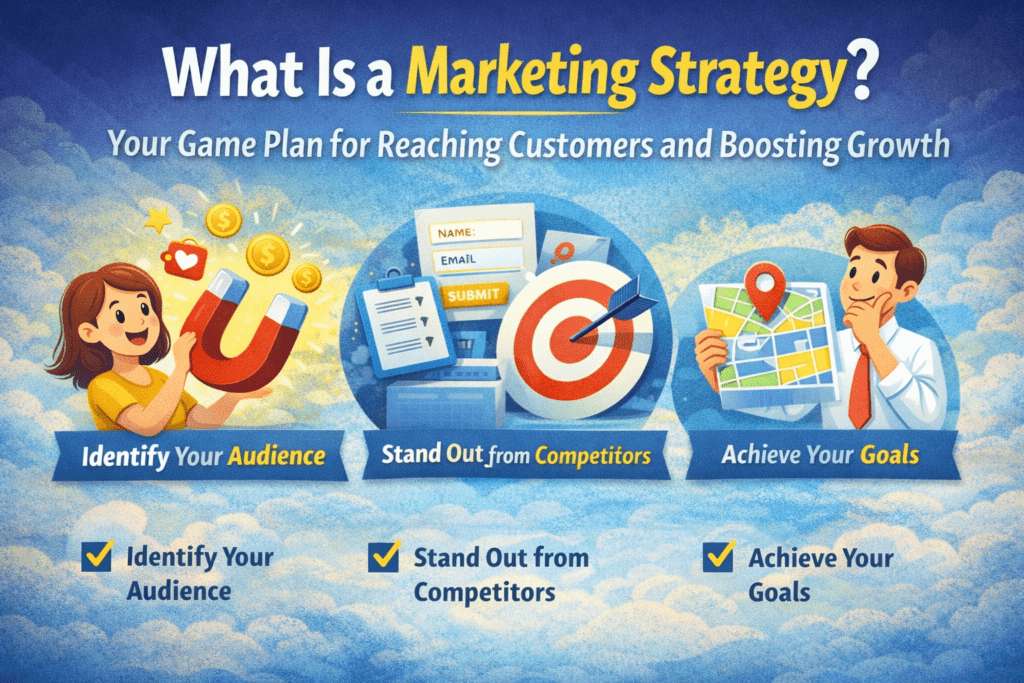
A marketing strategy is a long-term plan that defines who you want to reach, what you want to sell, how you’ll stand out, and how you’ll convince people to choose you.
It answers questions like:
Who are our ideal customers?
What problems do they have?
Why should they choose us over competitors?
Which channels will help us reach them?
Think of it as your business game plan. Just like a cricket team doesn’t step onto the field without strategy (unless they enjoy losing), businesses shouldn’t market without one either.
Why Is a Marketing Strategy So Important?
Can you market without a strategy?
Yes.
Will it work?
Sometimes.
Will it scale?
Absolutely not.
Here’s why a marketing strategy actually matters:
1. It Keeps You Focused
Instead of posting random content and running “trial” ads forever, you move with purpose.
2. It Helps You Understand Customers
A strategy forces you to research real people, not imaginary “everyone” audiences.
3. It Differentiates Your Brand
In crowded markets, strategy is what makes you memorable instead of forgettable.
4. It Saves Money
No more wasting budget on platforms your audience doesn’t even use.
5. It Makes Decisions Easier
New opportunity? You’ll instantly know if it fits your goals or not.
In short, marketing strategy connects business goals with customer needs—and that’s where growth lives.
What’s Included in a Marketing Strategy?
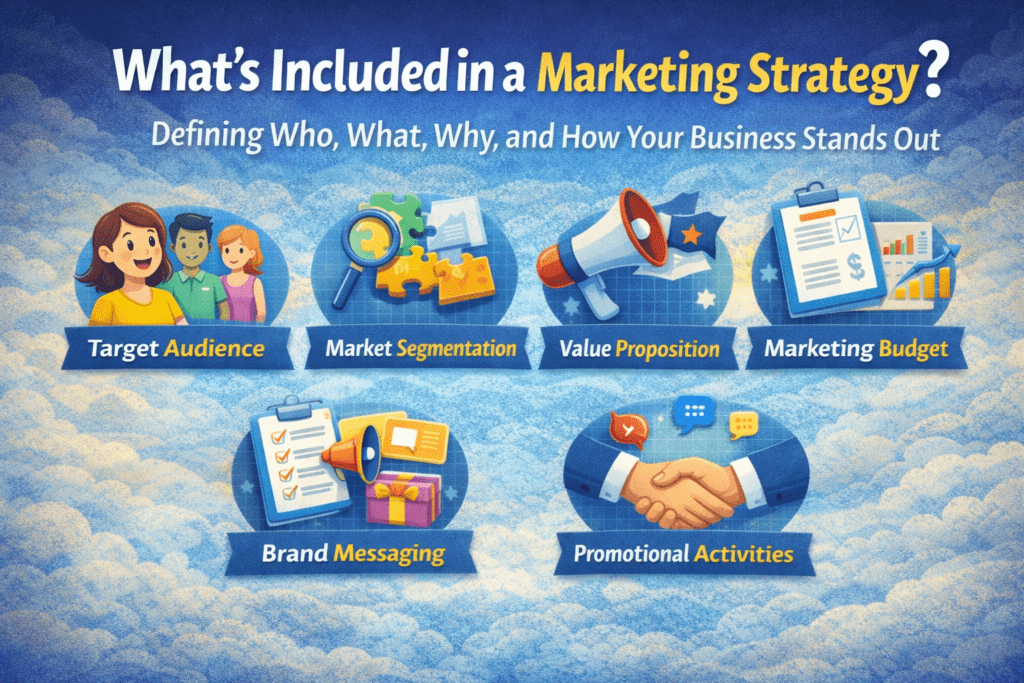
A strong marketing strategy doesn’t drown you in details. Instead, it sets direction. Here’s what it typically includes:
Target Audience – Who you’re speaking to
Market Segmentation – How audiences are grouped
Value Proposition (USP) – Why you’re different
Brand Messaging – Your voice, tone, and position
Product Mix – What you’re offering
Marketing Budget – Where money goes
Content Strategy – How content supports goals
Promotional Activities – Offers, campaigns, partnerships
AI Integration – How AI helps you scale smarter
Simple rule: Strategy decides what and why—execution decides how.
Types of Marketing Strategies You Should Know
Marketing isn’t one-size-fits-all. Depending on your business, you might use one or many of these:
Content Marketing
Search Engine Optimization (SEO)
Paid Advertising (Google Ads, Meta Ads)
Digital Marketing
Product Marketing
Email Marketing
Social Media Campaigns
Partnership & Influencer Marketing
The secret sauce?
Integration.
Your ads, emails, blogs, and social media shouldn’t sound like they belong to different companies. Consistency builds trust—and trust drives conversions.
How to Get Started with Your Marketing Strategy
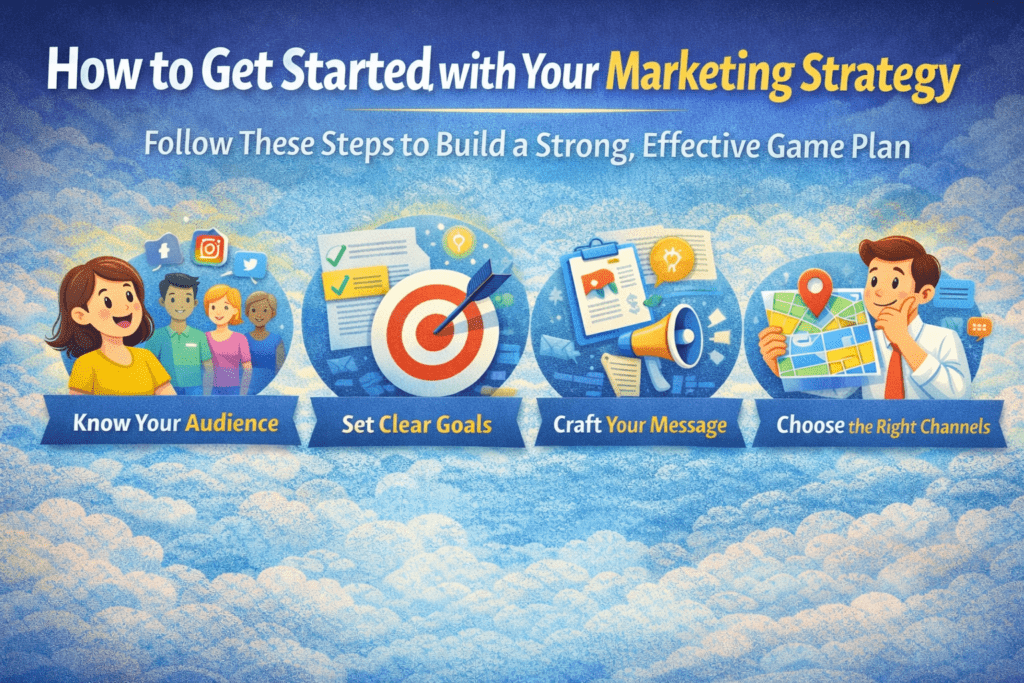
Feeling overwhelmed? Don’t worry. Start here:
1. Know Your Audience
Understand their problems, habits, platforms, and buying behaviour. Guessing is expensive—research is profitable.
2. Set Clear Goals
“More sales” is not a goal.
“Increase qualified leads by 25% in 6 months” is.
3. Craft Your Core Message
What makes you different? Say it clearly. Say it often.
4. Choose the Right Channels
Be where your audience is—not everywhere just because it’s trending.
5. Plan Your Budget
Spend smart. Test small. Scale what works.
6. Measure and Improve
Track KPIs, analyse performance, and adapt. Marketing is never “set and forget”.
A Simple Marketing Strategy Template
Here’s a quick framework businesses can actually use:
Step 1: Define Business & Marketing Goals
Align marketing goals with overall business objectives.
Step 2: Research Your Target Market
Study:
Market size and trends
Competitors
Customer pain points
Demographics & behaviour
Best marketing channels
Step 3: Focus on the 7 Ps of Marketing
Product – What problem you solve
Price – What customers are willing to pay
Promotion – How you communicate
Place – Where you sell
People – Who represents your brand
Packaging – How your product is presented
Process – How customers experience delivery
Step 4: Highlight Customer Benefits
Features impress.
Benefits convert.
Step 5: Define Positioning & Messaging
Position your brand around customer value, not just features.
Step 6: Choose Your Marketing Mix
Combine digital, social, content, paid, and offline channels strategically.
By- GenNex Marketers