
If visuals could talk, graphic design would be the confident speaker who grabs attention, explains things clearly, and leaves a lasting impression. From the logo on your favorite sneakers to the Instagram ad you didn’t skip, graphic quietly influences how we think, feel, and act every single day.
In today’s digital-first world, graphic is no longer optional — it’s essential. Let’s explore what graphic design really is, how it works, and why businesses (and users) simply can’t live without it.
What Is Graphic Design? (The Simple Explanation)
Graphic is the art and practice of creating visual content to communicate ideas, messages, and information. Designers use elements such as color, typography, imagery, layout, and spacing to transform concepts into visuals that people can instantly understand.
In simpler words:
Graphics turns ideas into visuals and messages into experiences.
Whether it’s a website, logo, social media post, brochure, packaging, or mobile app — graphics helps audiences connect with information quickly and emotionally.
Why Graphic Design Is So Important Today
Let’s face it — attention spans are shorter than ever. If your design doesn’t make sense in the first few seconds, users scroll, skip, or leave.
Graphic design helps by:
Making information easy to understand
Creating a strong first impression
Building brand identity and trust
Guiding users toward actions (clicks, sign-ups, purchases)
Improving readability and user experience
A good design feels natural. A bad design feels… confusing (and nobody likes that).
Graphic Design and Visual Communication
At its core, graphic is about visual communication — sharing ideas without relying only on words. Through thoughtful use of design elements, designers create visual paths that guide users from point A to point B.
For example:
Bold headlines tell you what matters most
Color creates mood and emotion
Spacing improves clarity
Icons simplify understanding
When done right, graphic design speaks before the text does.
Graphic Design vs UX Design: What’s the Difference?
Graphic design and UX (User Experience) design often work side by side, but they serve different purposes.
Graphic Design focuses on how things look — visual appeal, branding, and style.
UX Design focuses on how things work — usability, accessibility, and interaction.
Think of graphic design as the visual voice, and UX design as the user guide. Together, they ensure a design is both beautiful and functional.
Core Elements and Principles of Graphic Design
Every effective design is built on strong fundamentals. Some key elements include:
Design Elements
Color – Influences mood, emotion, and brand recognition
Typography – Affects readability and tone
Line & Shape – Define structure and flow
Space (White Space) – Improves focus and balance
Texture – Adds depth and visual interest
Design Principles
Balance – Keeps visuals stable and comfortable
Hierarchy – Shows what to notice first
Contrast – Improves visibility and emphasis
Repetition – Builds consistency
Harmony – Makes everything feel connected
Design without principles is decoration. Design with principles is communication.
The Graphic Design Process (Behind the Scenes)
Graphic isn’t random creativity — it follows a clear process:
Understanding the Objective – What problem needs solving?
Research – Audience, brand, and competitors
Concept Development – Brainstorming and sketching ideas
Design Execution – Creating layouts and visuals
Feedback & Refinement – Improving based on input
Final Delivery – Preparing files for digital or print use
This structured approach ensures creativity meets purpose.
Different Types of Graphic Design
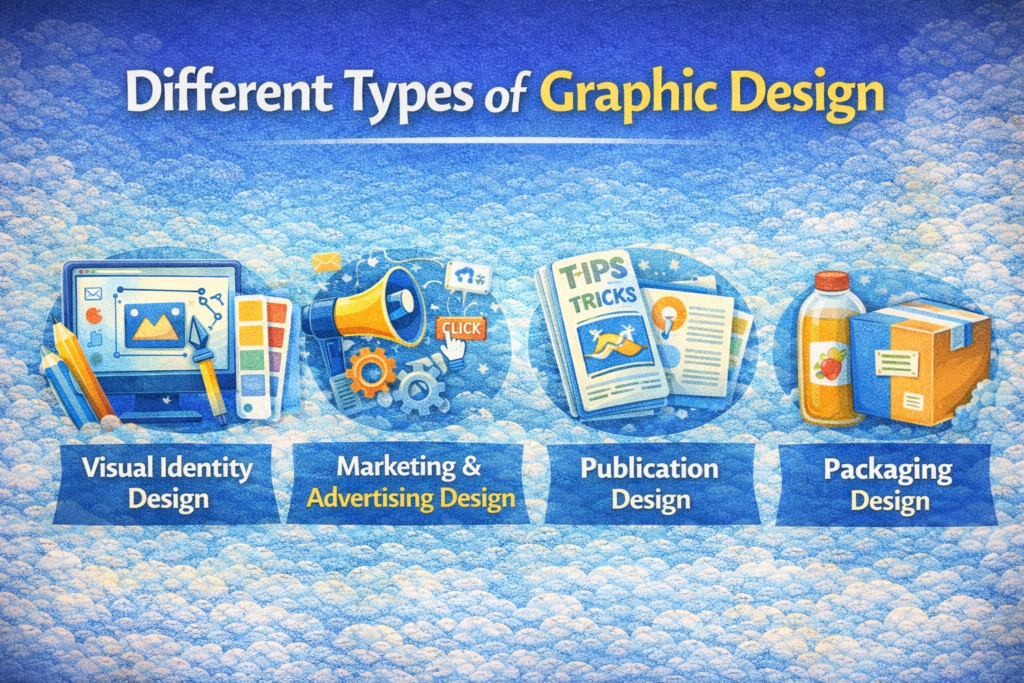
Graphic covers a wide range of specialties:
Visual Identity Design
Logos, brand colors, typography, and brand guidelines.
Marketing & Advertising Design
Social media creatives, ads, banners, email visuals, and campaigns.
Publication Design
Magazines, brochures, reports, ebooks, and catalogs.
Packaging Design
Designs that protect products and attract buyers at the same time.
Illustration & Motion Design
Custom graphics, icons, animations, and visual storytelling.
Each type requires a unique blend of creativity and strategy.
Tools Used by Graphic Designers Today
Modern designers rely on industry-standard tools such as:
Adobe Illustrator for vector graphics and logos
Adobe Photoshop for image editing
Adobe InDesign for layouts and publications
Figma for UI and collaborative design
But remember — tools are just tools. The real magic lies in design thinking.
Skills That Make a Great Graphic Designer
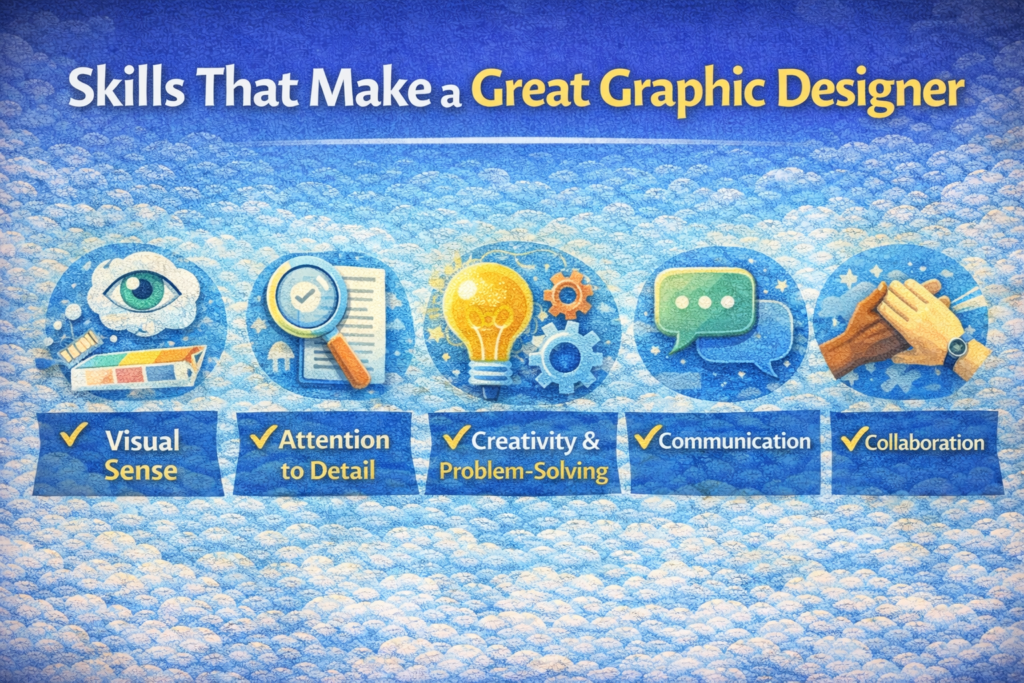
Beyond software, successful designers develop:
Strong visual sense
Attention to detail
Creativity and problem-solving
Communication and collaboration skills
Ability to accept feedback and improve
Graphics is both an art and a discipline.
Is Graphic Design a Good Career Choice?
Absolutely. With businesses going digital and branding becoming more competitive, skilled designers are always in demand.
Graphic design careers exist in:
Marketing agencies
Tech companies
Media and publishing
Freelancing and entrepreneurship
If you enjoy creativity with purpose, design can be both fulfilling and future-ready.
By- GenNex Marketers